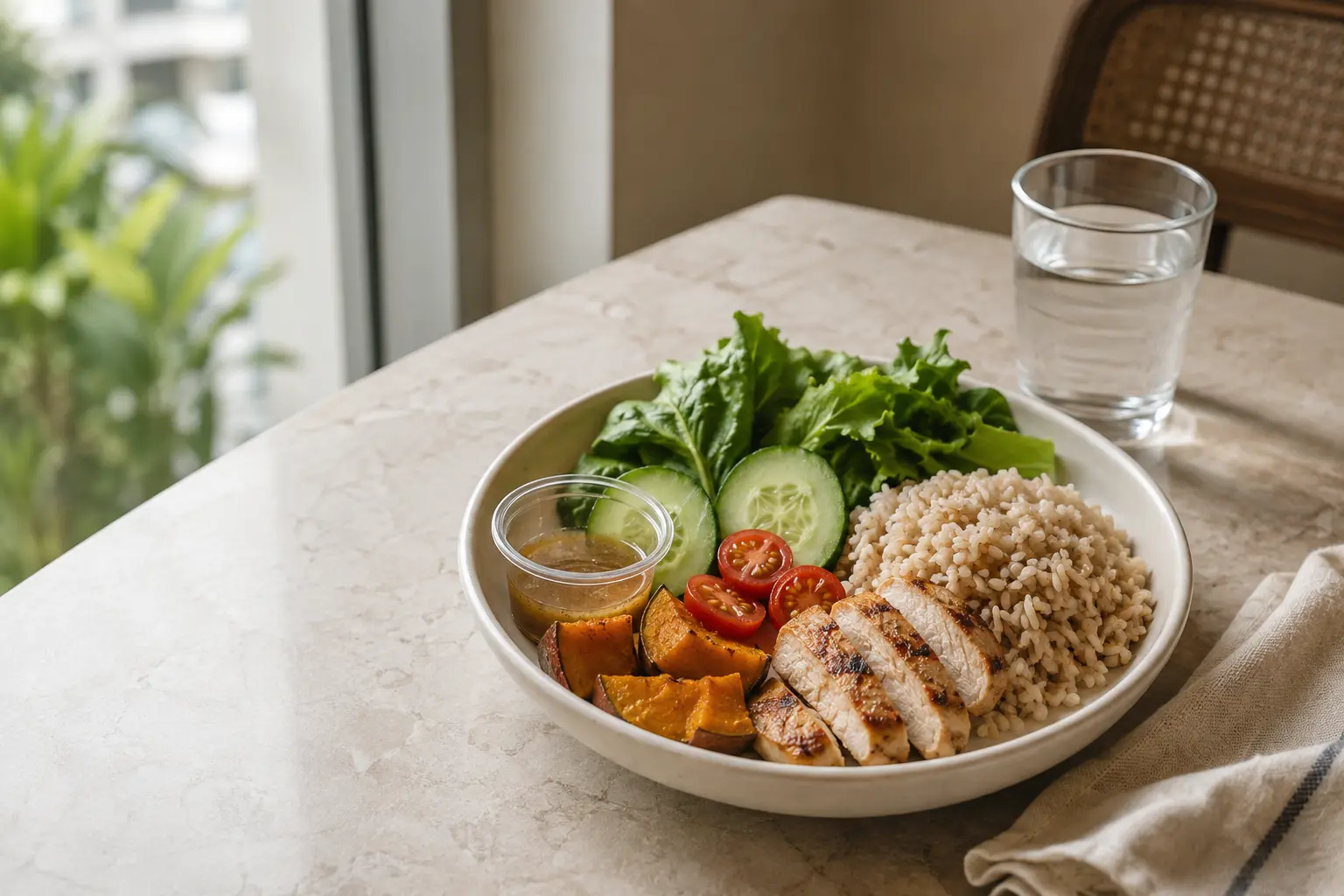
Healthy eating does not need to mean following a perfect menu, cutting out familiar foods or changing everything at once. For most people, it is more useful to build a flexible pattern that works across home meals, office lunches, food courts and weekends.
This guide explains the basics in a practical way. It is intended as general education, not personalised medical or dietary advice.
What healthy eating means in everyday life
A healthy eating pattern gives your body a useful mix of vegetables and fruit, protein foods, grains or other staple foods, and fluids. Variety matters because different foods provide different nutrients. Balance across the day and week is usually more realistic than trying to make every single meal perfect.
In Singapore, the Health Promotion Board’s My Healthy Plate is a convenient visual guide: roughly half the plate from fruit and vegetables, one quarter from wholegrains, and one quarter from meat or other protein foods. It is a guide rather than a rigid rule, so it can be adapted to rice, noodles, soup, mixed dishes and meals eaten outside the home.
Start with the structure of the meal
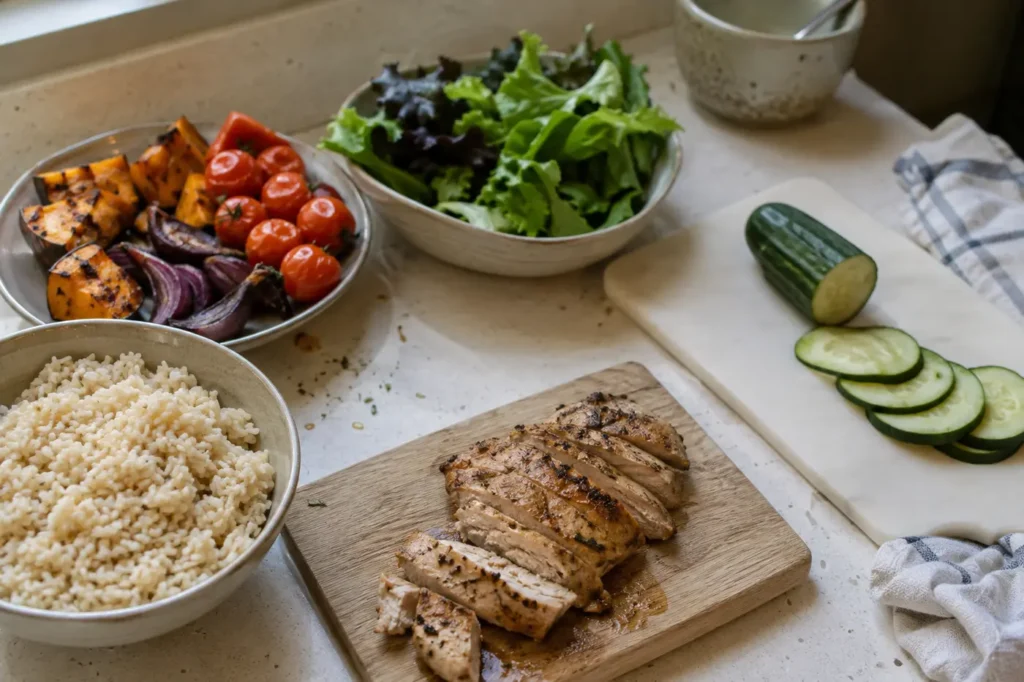
Add vegetables or fruit
When ordering or preparing a meal, first ask where the vegetables or fruit will come from. This could be a vegetable side, extra greens in a noodle dish, a mixed salad, vegetable soup or whole fruit after the meal. Thinking about this first often makes the rest of the meal easier to balance.
Include a practical protein source
Protein foods can include fish, chicken, eggs, tofu, beans, lentils, dairy foods and other options that suit your preferences. The goal is not to chase the largest possible portion. A moderate serving alongside vegetables and a staple food can form a satisfying everyday meal.
Choose a staple that fits the meal
Rice, noodles, bread, oats, potatoes and other staples all have a place. Wholegrain versions can add variety and fibre when they are available and enjoyable. A gradual switch, such as mixing brown and white rice, may be easier to maintain than an all-or-nothing change.
Make healthier choices easier to repeat
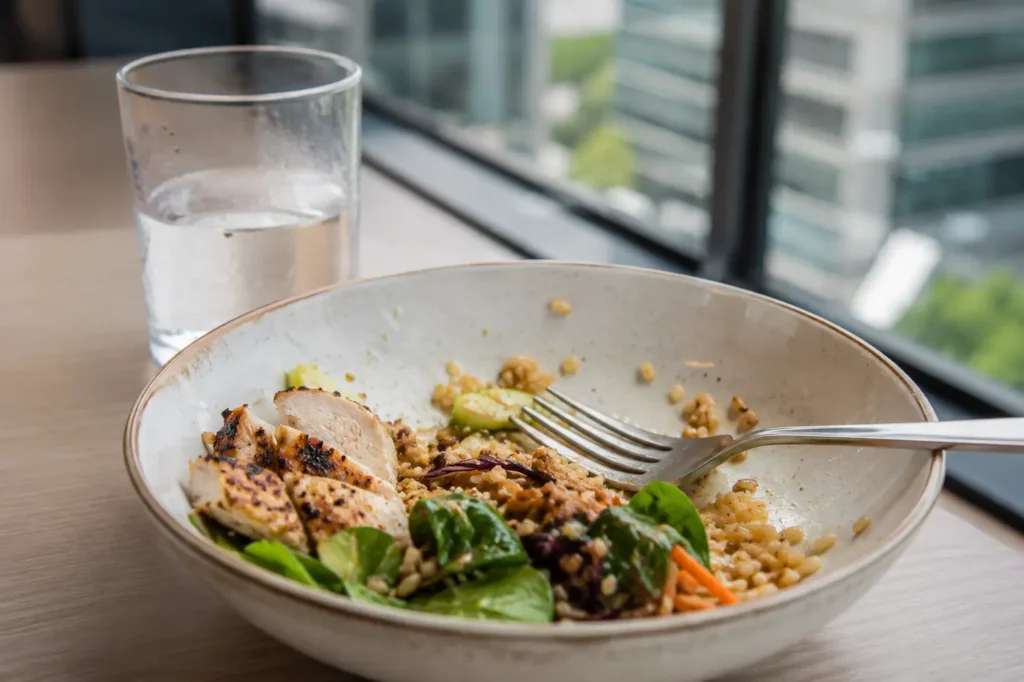
Consistency usually comes from reducing friction. Keep a few reliable foods at home, identify several lunch options near work, and decide on simple defaults before you are very hungry. A useful default might be water with lunch, an extra vegetable side, sauce served separately, or fruit kept within easy reach.
Healthy eating also leaves room for enjoyment. One richer meal does not cancel an otherwise balanced pattern. The next meal is simply another opportunity to return to your usual routine.
Healthy eating when dining out in Singapore
Food courts, hawker centres and restaurants offer many combinations. Look at the complete meal rather than judging a dish by one ingredient. You can often improve the overall balance by adding vegetables, choosing a suitable protein, requesting less sauce or gravy, and selecting water or a lower-sugar drink.
If a portion is larger than you need, eating slowly and stopping when comfortably satisfied can be more practical than following a fixed rule. For more ideas, read our guide to healthier food choices when eating out in Singapore.
A simple weekly approach
- Choose one breakfast or lunch that is easy to repeat.
- Add one more vegetable or fruit serving to a meal you already eat.
- Keep water available during the day.
- Try one wholegrain option and decide whether it works for you.
- Review your routine at the end of the week without judging individual meals.
Frequently asked questions
Do I need to count calories to eat healthily?
Not everyone needs to count calories. Many people can start with meal structure, variety, reasonable portions and regular eating habits. Anyone with a medical condition or a specific nutrition requirement should seek advice from an appropriately qualified professional.
Can familiar local food be part of healthy eating?
Yes. Healthy eating is a pattern, not a list of special foods. Familiar meals can often be adjusted through portions, sides, cooking choices and the balance of foods across the day.
Explore more Healthy Eating guides or visit CLITE for our approach to lighter everyday living.