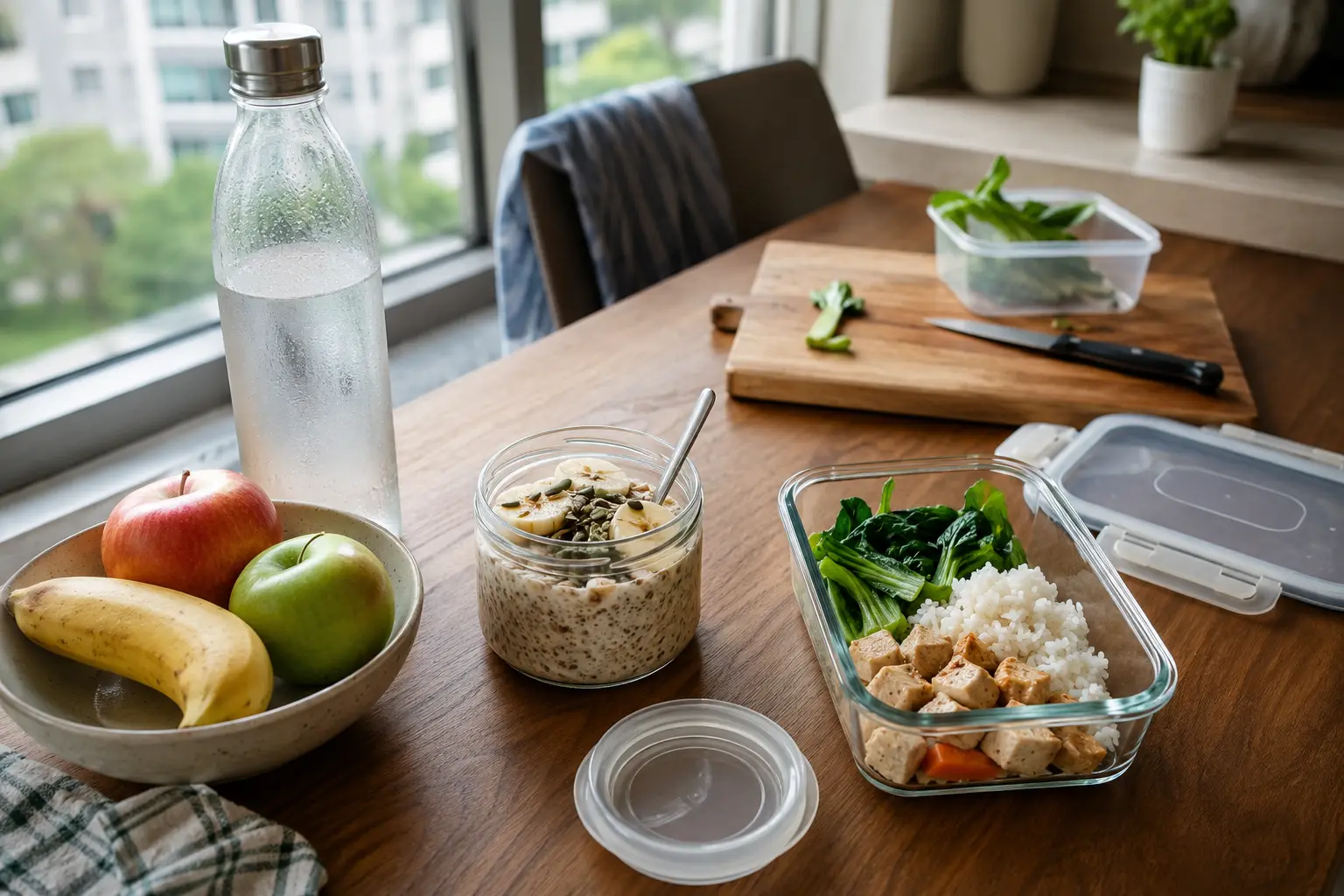
Nutrition advice can become overwhelming when every choice is presented as urgent. In practice, a few repeatable habits are often more useful than a long list of rules.
1. Add before you subtract
Instead of beginning with foods to remove, look for something useful to add: vegetables to lunch, fruit with breakfast, protein in a snack, or water during the day. Adding structure can naturally change the balance of a meal without making eating feel restrictive.
2. Keep one dependable meal
A reliable breakfast or lunch reduces decision fatigue. It might be oats with yoghurt and fruit, eggs with wholemeal toast, or a rice bowl with vegetables and protein. The meal does not need to be identical every day; the structure can stay the same while ingredients change.
3. Make the easier choice visible

Store ready-to-eat fruit where you can see it, keep water within reach, and place useful ingredients at the front of the fridge. Environment often influences behaviour more than motivation.
4. Plan lightly

You do not need a detailed seven-day meal plan. Decide on a few lunches, buy ingredients for two or three simple dinners, and leave room for leftovers or meals outside. A plan with flexibility is more likely to survive a busy week.
5. Use meal structure as a check
Ask whether a meal has vegetables or fruit, protein and a suitable staple. This quick check is often more practical than judging foods one by one. Read our simple guide to balanced meals for more detail.
6. Eat with enough attention
When possible, step away from work for a few minutes, slow the first part of the meal and notice taste and fullness. Perfectly distraction-free eating is not always realistic, but small moments of attention can help.
7. Treat drinks as part of the pattern
Water is a useful everyday default. Coffee, tea and other drinks can fit too; the amount of added sugar and toppings can change the overall choice. Decide deliberately instead of drinking on autopilot.
8. Review the week, not one meal
A single meal cannot define the quality of your diet. Look for patterns across several days: variety, vegetables and fruit, protein sources, wholegrains when suitable, and how regularly you eat.
Make habits specific enough to practise
“Eat better” is difficult to act on because it is too broad. A specific habit might be “add one vegetable dish to lunch on three workdays” or “bring a water bottle to the desk each morning.” A clear action is easier to remember and review.
Link the new habit to something that already happens. Put fruit beside the breakfast bowl, fill a bottle after making coffee, or check tomorrow’s lunch while clearing dinner. This reduces the need to rely on willpower.
Choose one habit to begin
Select the change that feels easiest, practise it until it requires less effort, and only then add another. Small improvements become valuable when they are repeated.
Frequently asked questions
How long does a nutrition habit take to form?
There is no fixed number of days that applies to everyone. Complexity, environment and frequency all matter. Focus on making the action easy to repeat and expect occasional missed days.
Should I change several habits at once?
You can, but one or two changes are often easier to observe and maintain. Once they feel stable, decide whether another change would genuinely help.
What should I do after an unplanned meal?
Continue with your normal routine. There is no need to compensate. The next meal is simply another chance to use the structure that works for you.
Explore more Nutrition Guides or return to the CLITE Journal.