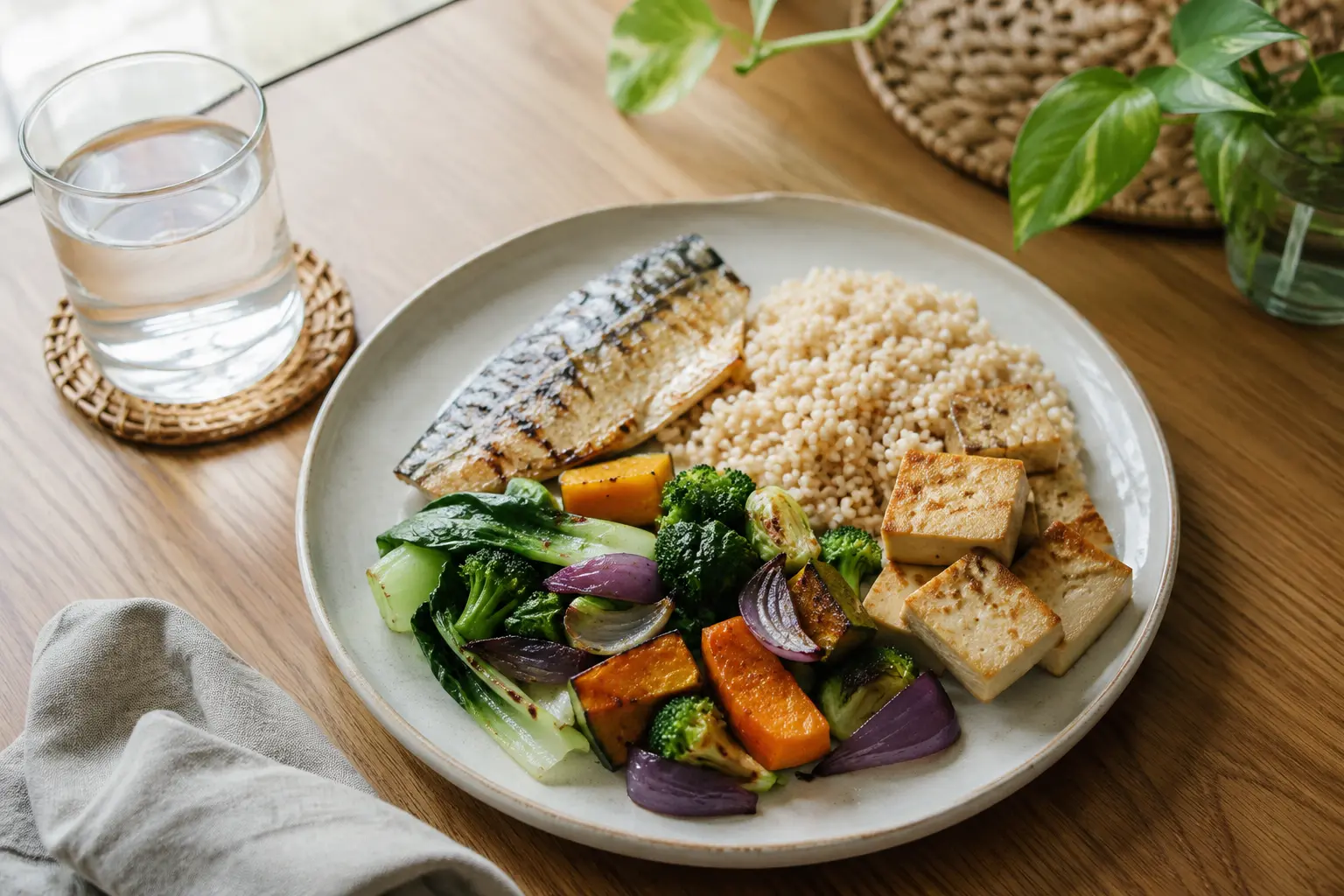
A balanced meal brings together several food groups in proportions that support variety, satisfaction and everyday nutrition. It does not have to look like a textbook diagram, and it does not require unusual ingredients.
The basic parts of a balanced meal
Vegetables and fruit
Vegetables and fruit add colour, texture, fibre and a range of vitamins and minerals. They may appear as a side dish, inside a soup or stir-fry, as part of a mixed meal, or as whole fruit served afterwards.
Protein foods
Protein sources include fish, poultry, eggs, tofu, beans, lentils, dairy foods and many other choices. Variety is helpful because different protein foods bring different nutrients and flavours.
Grains and other staple foods
Staple foods such as rice, noodles, bread, oats and potatoes provide energy and help make a meal satisfying. Wholegrain choices can be included when available, but the overall pattern matters more than whether every meal uses the same staple.
Using a visual guide instead of measuring everything
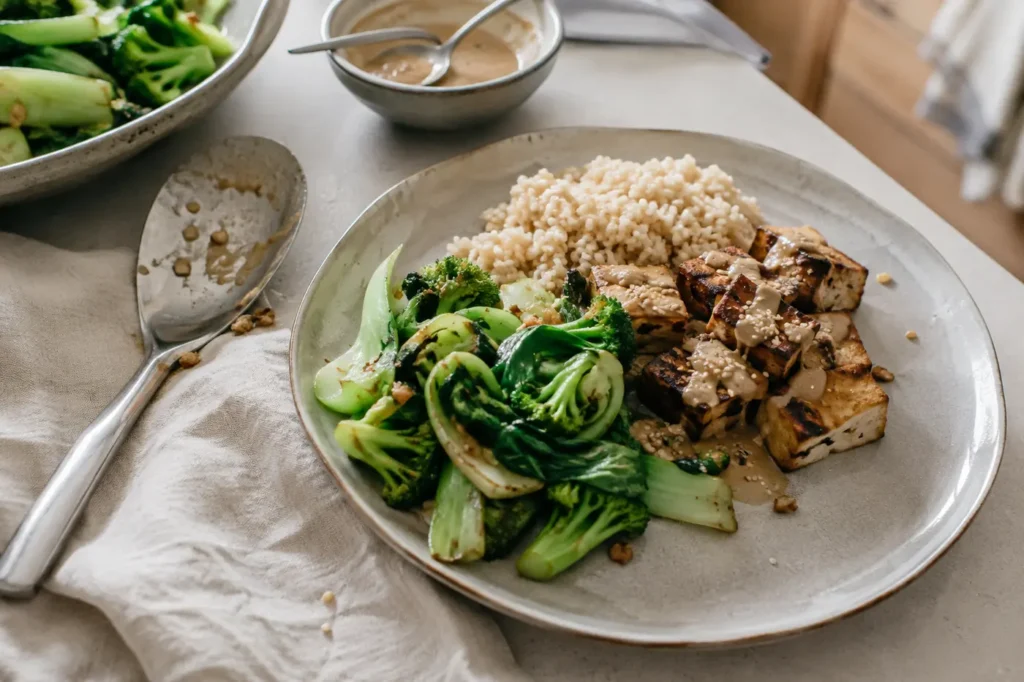
Singapore’s My Healthy Plate uses a quarter-quarter-half visual: half fruit and vegetables, one quarter wholegrains and one quarter meat or other protein. The value of this approach is its simplicity. You can use it as a mental check rather than measuring every ingredient.
Mixed dishes will not always separate neatly into sections. For a rice bowl, noodle soup or one-pot meal, look at the ingredients as a whole. Is there a meaningful amount of vegetables? Is there a protein source? Does the portion of staple food suit your appetite and activity?
Balanced does not mean identical
Breakfast may be smaller than lunch. A light evening meal may use soup, tofu and vegetables, while another day might include rice, fish and two vegetable dishes. Balance can be considered across several meals rather than forced into one exact template.
Culture, budget, schedule, allergies, preferences and health needs all affect food choices. A useful meal pattern should be flexible enough to work in real life.
Common ways to improve an everyday meal
- Add a vegetable side or whole fruit.
- Include a clear protein source rather than relying only on the staple.
- Choose water regularly and keep sweet drinks as an intentional choice.
- Use sauces and gravies in an amount that supports, rather than overwhelms, the meal.
- Eat at a comfortable pace and notice when you feel satisfied.
Examples of flexible meal structures
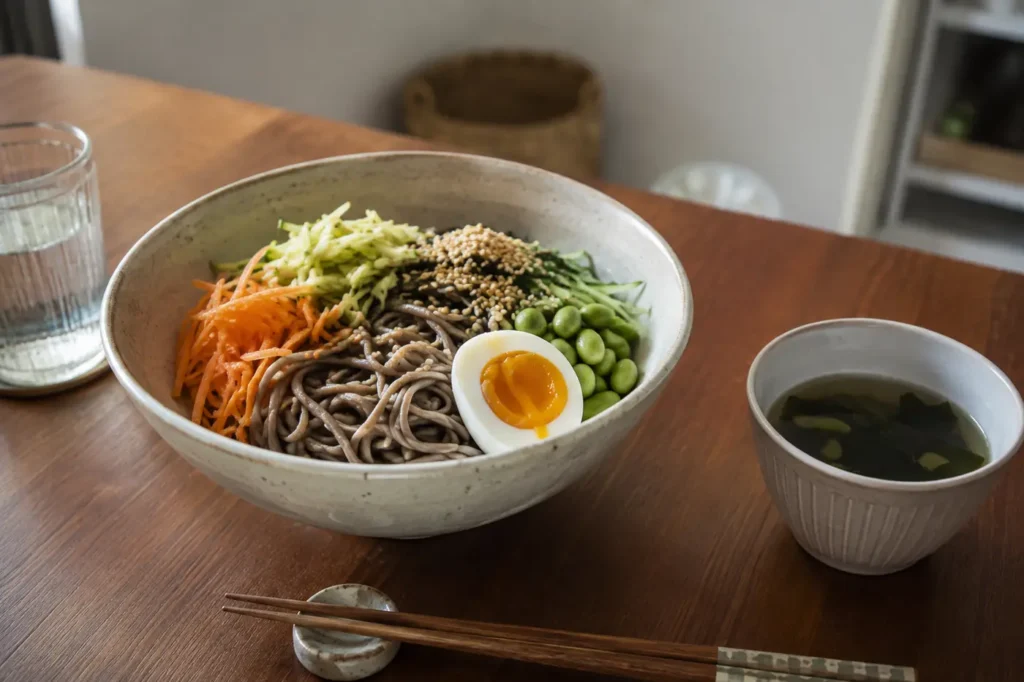
A balanced meal could be rice with fish, tofu and vegetables; noodles with lean protein and extra greens; wholemeal toast with eggs and fruit; or a grain bowl with beans and mixed vegetables. These are structures, not prescriptions.
If you prefer something smaller, our guide to light meals for everyday eating explains how a lighter meal can still include variety and substance.
When individual advice matters
General plate guides are designed for broad education. People with diabetes, kidney disease, food allergies, pregnancy-related needs, eating disorders or other medical concerns may require individual advice from a qualified healthcare or nutrition professional.
Frequently asked questions
Does every meal need to follow the same proportions?
No. A plate guide is a practical visual reminder, not a test. Some mixed dishes and smaller meals will look different. Consider the overall balance across the day and adjust the next meal naturally if one food group was limited.
Is a balanced meal always a large meal?
No. A smaller meal can still include vegetables or fruit, protein and a suitable staple. The amount depends on appetite, activity, time of day and individual needs.
What if wholegrains are not available?
Choose from what is available and focus on the complete meal. Wholegrains are one useful option, but vegetables, protein, portions, drinks and the pattern across the week also matter.
Continue with more Nutrition Guides from The CLITE Journal.